Data agents maintaining data for AI agents: the Cogstrata approach
Published 2 April 2026 · 9 min read

There is a certain elegance to the idea that the best way to prepare data for AI agents is to use AI agents to prepare it. At Cogstrata, this is not a philosophical position — it is the operational architecture. Our data is maintained by a fleet of specialised data agents, each responsible for a distinct aspect of the curation pipeline. The result is a dataset that is not just accurate and current, but structurally ready for consumption by the next generation of autonomous AI systems.
This piece explains what that fleet looks like, what each layer does, and why the approach produces data that is fundamentally different from what you get from a traditional batch data provider.
Why human-managed data pipelines are reaching their limits
The traditional model for maintaining a demographic data product involves a team of data engineers and analysts who build ETL pipelines, schedule batch jobs, run quality checks, investigate anomalies, and periodically retrain or recalibrate models. This works well when the data refreshes annually or quarterly. It does not scale to continuous processing across dozens of input streams, each with different update frequencies, formats, and reliability characteristics.
The problem is not that the people are not skilled — they are. The problem is that continuous data curation generates a volume and variety of decisions that exceeds what a human team can sustain at the required speed. When Land Registry data updates, is the new transaction consistent with the existing price trajectory for that postcode? When an EPC certificate is registered, does it change the energy efficiency profile enough to trigger a recalculation of the household cost burden estimate? When the Bank of England adjusts the base rate, which derived attributes need to be recomputed, and in what order?
A human team can handle these questions on a batch schedule. On a continuous schedule, across 1.7 million UK postcodes and hundreds of derived attributes, the decision volume becomes unmanageable without autonomous processing.
The fleet: how Cogstrata's data agents work
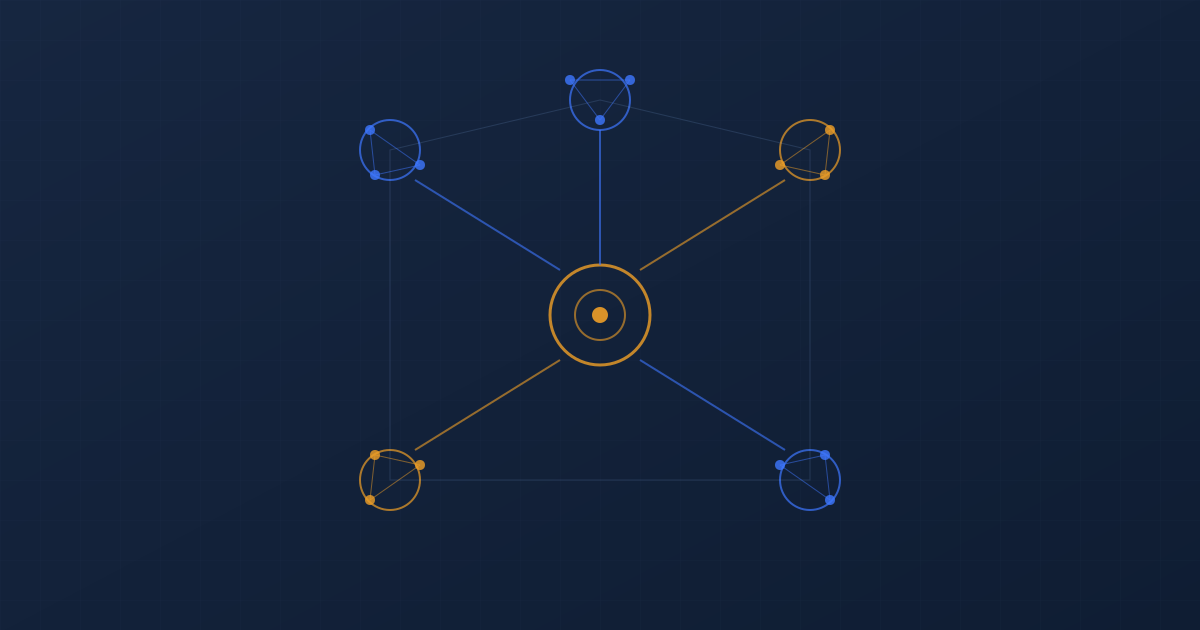
Cogstrata's data maintenance architecture is organised around specialised agent roles, each handling a distinct layer of the curation process. These are not general-purpose AI models applied to data tasks — they are purpose-built agents with narrow responsibilities, clear decision boundaries, and defined escalation paths.
The first layer is ingestion monitoring. These agents watch incoming data streams — Land Registry feeds, EPC registrations, ONS releases, macroeconomic indicators — and assess each update for completeness, format consistency, and expected value ranges. When an incoming data point falls outside expected parameters, the agent flags it for review rather than silently passing it through. This is the equivalent of the quality gate that a data engineer would apply manually, but operating continuously across every input stream simultaneously.
The second layer is cross-signal validation. When a new data point arrives for a given postcode, these agents check it against the existing attribute profile for that location. A sharp increase in property transaction values, for instance, is cross-referenced against employment data, planning application records, and recent EPC registrations to determine whether the shift is consistent with other signals or likely anomalous. A human analyst would do this intuitively for a handful of postcodes. These agents do it systematically across every postcode, every time a signal updates.
The third layer is derived attribute recomputation. Cogstrata's dataset includes composite scores — financial stress indicators, lifestyle classifications, retail accessibility scores — that are derived from multiple input signals. When any underlying signal changes, the relevant derived attributes must be recalculated. These agents manage the dependency graph: they know which attributes depend on which inputs, they execute recomputation in the correct order, and they record what changed, when, and why. This creates the provenance trail that downstream AI agents need to trust the data they receive.
The fourth layer is metadata enrichment. Every time an attribute is updated or recomputed, these agents attach structured metadata: the timestamp of the update, the input signals that contributed, the confidence level of the new value, and the delta from the previous value. This metadata is not an afterthought — it is a first-class part of the data product, because it is what allows a consuming AI agent to make informed decisions about how much weight to place on any given attribute.
Explore the metadata layer
Request a sample enrichment and see the full provenance metadata, confidence signals, and freshness timestamps that our data agents attach to every attribute.
The virtuous cycle: agents improving data for agents
The most significant advantage of this architecture is that it creates a feedback loop that improves data quality over time in ways that a batch process cannot. When a downstream consuming agent — a client's credit risk model, for example — queries the Cogstrata API and receives an attribute with a low confidence score, that signal is itself information. It tells the maintenance agents that a particular postcode or attribute class has thin coverage, which can trigger additional inference processing or flag the area for supplementary data sourcing.
In a traditional batch model, this feedback loop does not exist. The data is compiled, shipped, and consumed. If the consuming application finds the data unreliable for certain segments, that information stays with the consumer — it never flows back to the data provider's curation process in a structured way.
The agent-maintained model closes this loop. The curation agents learn which areas of the dataset are most frequently queried, which attributes carry the lowest confidence, and where the gap between available input signals and desired output precision is widest. Over time, this produces a dataset that is not just accurate on average, but specifically refined for the use cases that matter most to the agents consuming it.
What this means for data consumers
For teams building agentic applications, the practical consequence of agent-maintained data is straightforward: the data arrives ready to use. There is no need to build a preprocessing layer to handle staleness detection, anomaly filtering, or confidence estimation — because those functions have already been performed by specialised agents upstream.
Every attribute in the Cogstrata dataset carries a structured metadata envelope that includes the last update timestamp, the contributing data sources, the confidence band, and the change magnitude since the previous computation. A consuming agent can read this metadata programmatically and make its own decisions about how to weight each attribute — without needing to reverse-engineer data quality from the values themselves.
This is the difference between data that was designed for a human to interpret and data that was designed for a machine to act on. The curation layer — the layer that a human analyst provides implicitly when they bring judgement and context to their analysis — is built into the data itself. It is not an add-on or a premium feature. It is the architecture.
The question for any organisation evaluating data sources for agentic applications is not just whether the data is accurate. It is whether the data was maintained by a process that understands what autonomous consumption requires — and whether that process is itself operating at the speed and scale that continuous decision-making demands.
This is part two of our Agent-Ready Data series
Exploring why demographic intelligence built for autonomous AI agents requires a fundamentally different approach to data architecture, curation, and delivery.
Request a Free Sample